Baroxon Global | Boom Barrier & Parking Systems

What to Consider When Buying a Heavy-Duty Parking Barrier
Release time:
2026-11-05
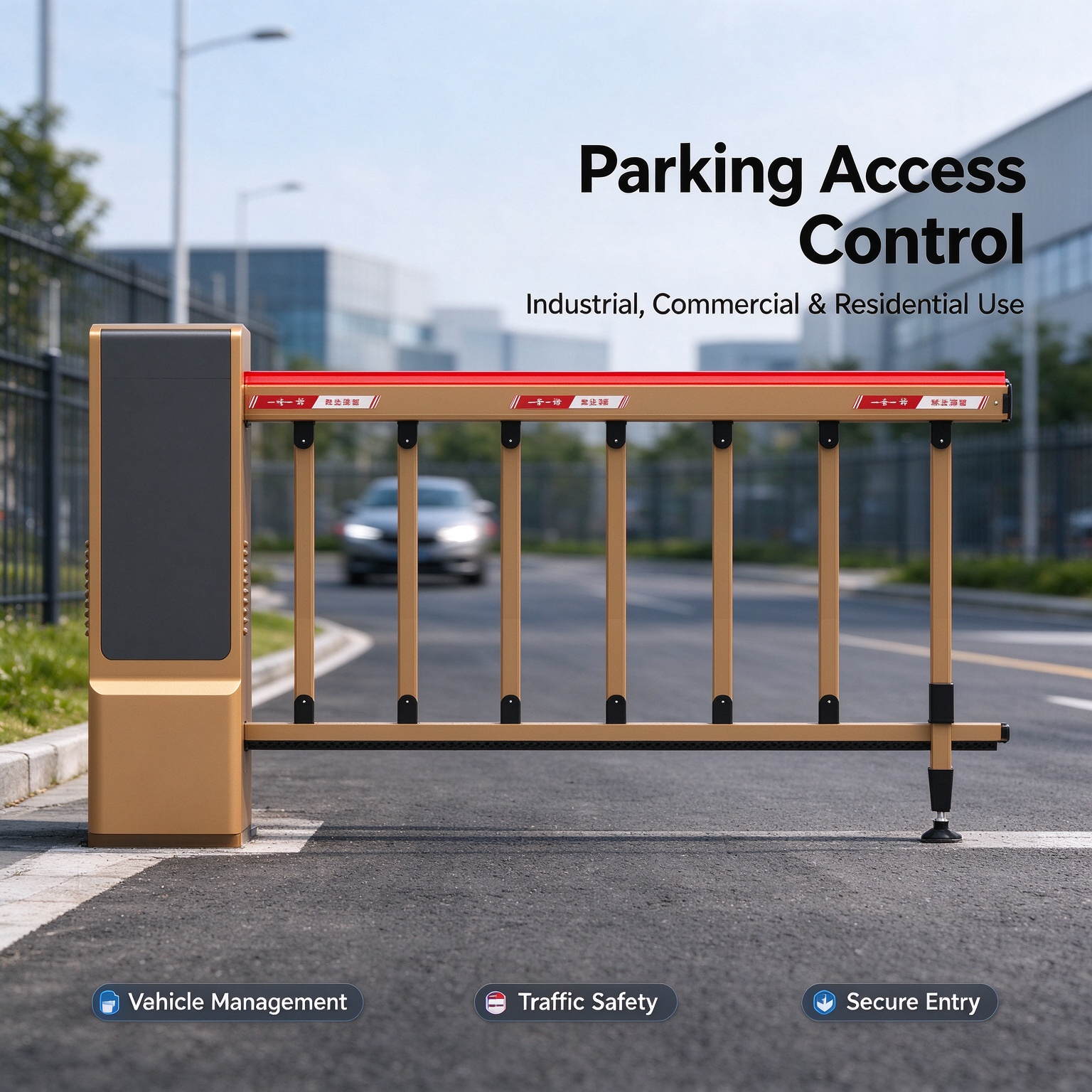
A heavy-duty parking barrier is more than a boom arm at the entrance. For a busy car park, business park, residential development or industrial site, the right system must manage repeated vehicle movements, integrate with the chosen access-control method and operate safely in changing weather. Before requesting a quotation, define the traffic demand, lane geometry, safety requirements and future integration needs rather than choosing on purchase price alone.
1. Start with the site and traffic profile
The best heavy-duty parking barrier depends on where it will be installed and how often it will operate. A staff car park with predictable morning and evening peaks has different demands from a distribution centre, hospital, retail park or multi-storey car park with near-continuous traffic. Record the average and peak vehicles per hour, opening hours, queue length, vehicle types and whether entry and exit need separate lanes.
A site survey should also check available mounting space, kerbs, drainage, nearby walls, turning circles, pedestrian routes and the position of any ticket machine, intercom or ANPR camera. These details affect the boom length, cabinet position, detector layout and maintenance access.
2. Choose the correct boom length and arm type
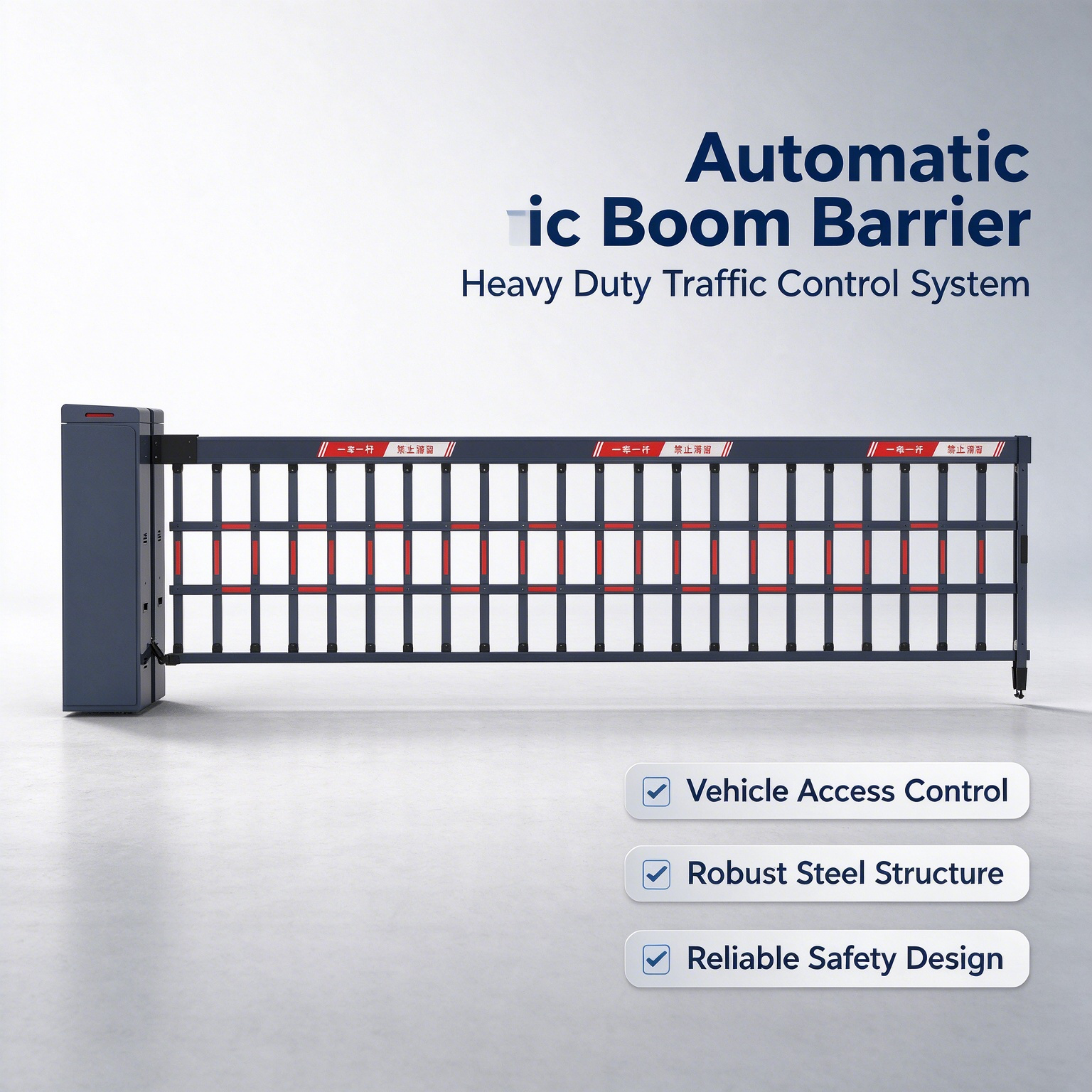
Measure the actual clear width that vehicles need to pass, not simply the width shown on a site drawing. The boom must cover the intended lane without striking kerbs, signs, walls or adjacent equipment. Barrier ranges list different arm lengths and straight, folding or multi-rail fence-style options; confirm the available length and compatible arm type for the exact model before ordering.
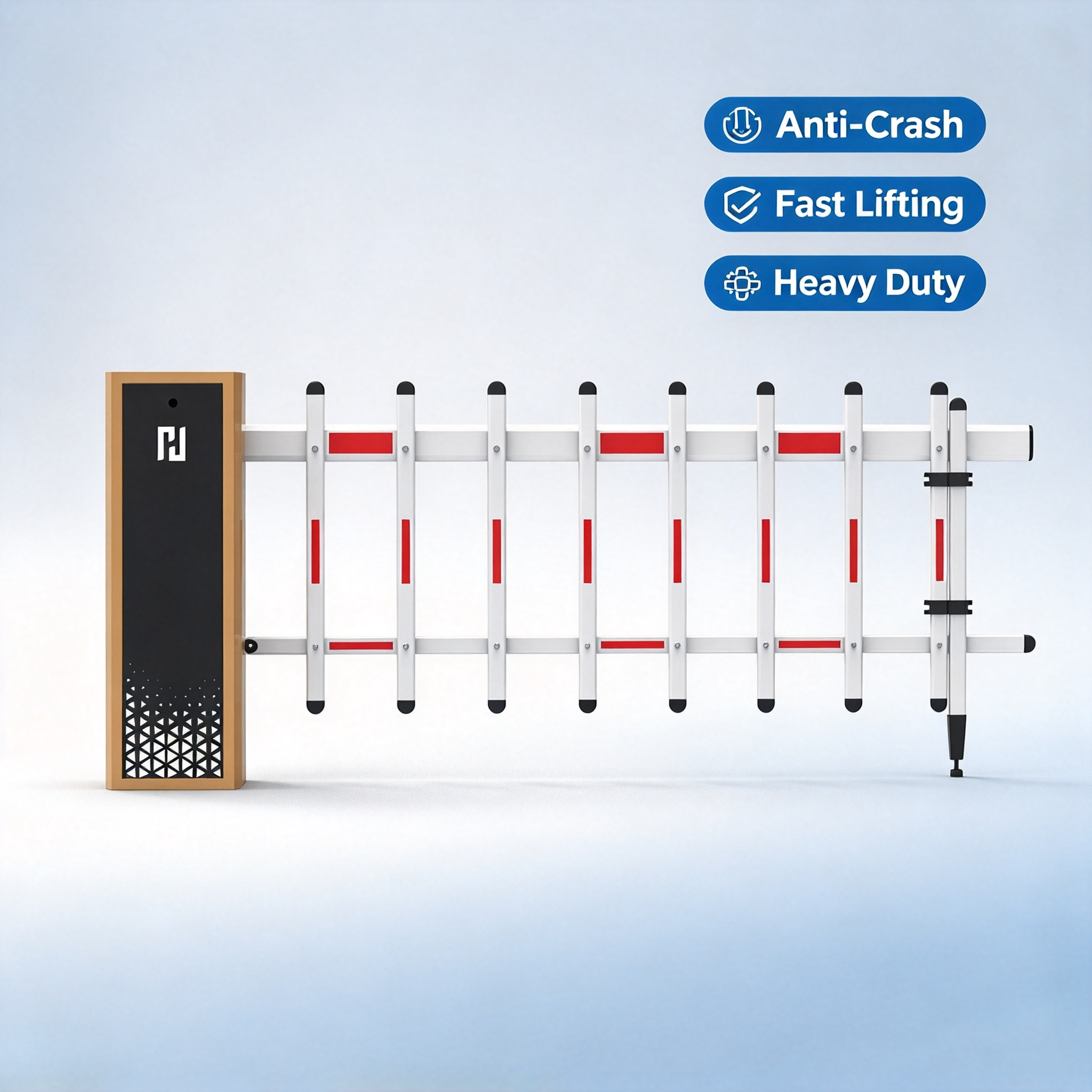
A straight arm is often suitable where overhead clearance is available. A folding arm may be worth considering where a low ceiling or building overhang limits vertical clearance. A fence-style arm can provide a more visually closed lane, but it adds wind loading and mechanical considerations. Ask the supplier to confirm the permitted arm length, operating speed and site suitability as a complete configuration.
3. Check motor type, duty cycle and operating speed
For frequent use, ask about the motor and drive mechanism, rated duty cycle, expected daily operations, opening and closing time, soft-start and soft-stop behaviour and service life testing. Brushless DC and heavy-duty AC drive options are available across barrier ranges, with adjustable operating parameters on relevant models. Specifications vary by product, so request the exact model datasheet rather than assuming every feature is standard.
Do not select the fastest barrier automatically. The operating speed should match traffic flow, vehicle detection, pedestrian separation and the site’s safety strategy. At a busy entrance, a properly designed system that balances throughput and safe movement is more useful than a headline speed that does not suit the lane.
4. Prioritise safety and vehicle detection
A barrier arm can cause injury or vehicle damage if it closes onto a vehicle or person. Ask how the proposed system detects vehicles and obstacles, how it responds when an obstruction is detected, and which safety devices are included or optional. Depending on the layout, the design may use an inductive loop detector, radar sensor, photocell or other compatible detection equipment. Confirm the detection zones and the behaviour of the arm during entry, exit, tailgating and power interruption. Our guide to parking barrier safety sensors explains how each detection technology behaves in practice.
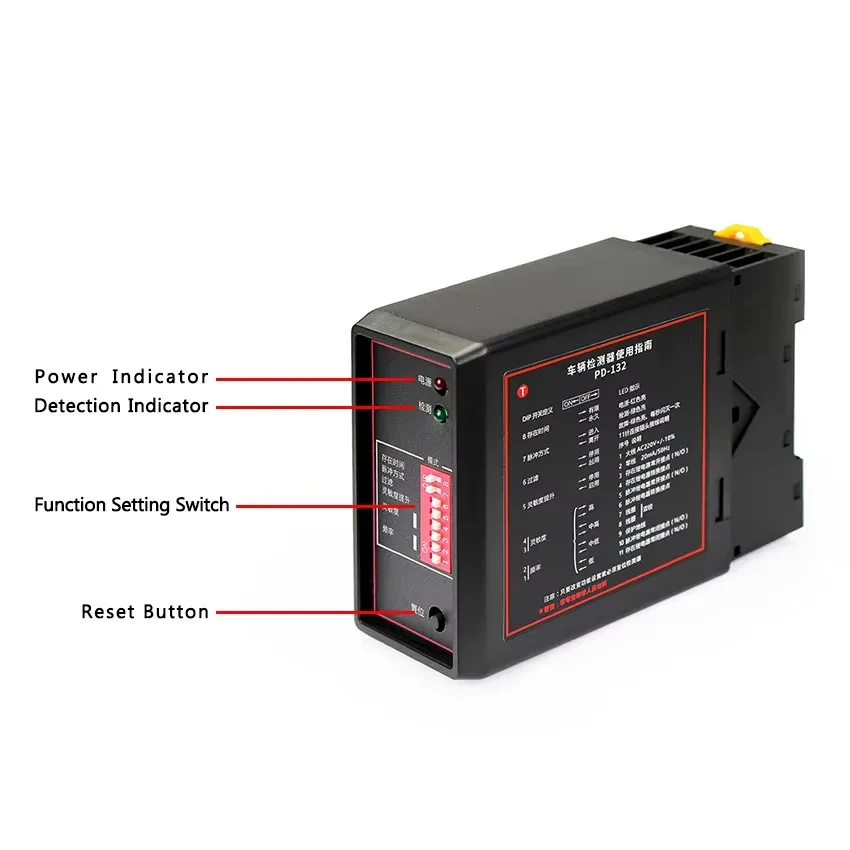
Anti-collision radar and related vehicle-detection products should be matched to the selected barrier. Confirm the exact sensor model, compatibility, installation position and commissioning procedure. A sensor should not be treated as a substitute for a site-specific risk assessment, safe lane design, suitable signage or competent installation.
For any project, ask the installer or supplier to identify the applicable legislation, standards and conformity documentation for the complete installed system. Do not rely on a generic “compliant” claim: the required evidence depends on the product, intended use, installation and project specification.
5. Consider the weather and enclosure rating
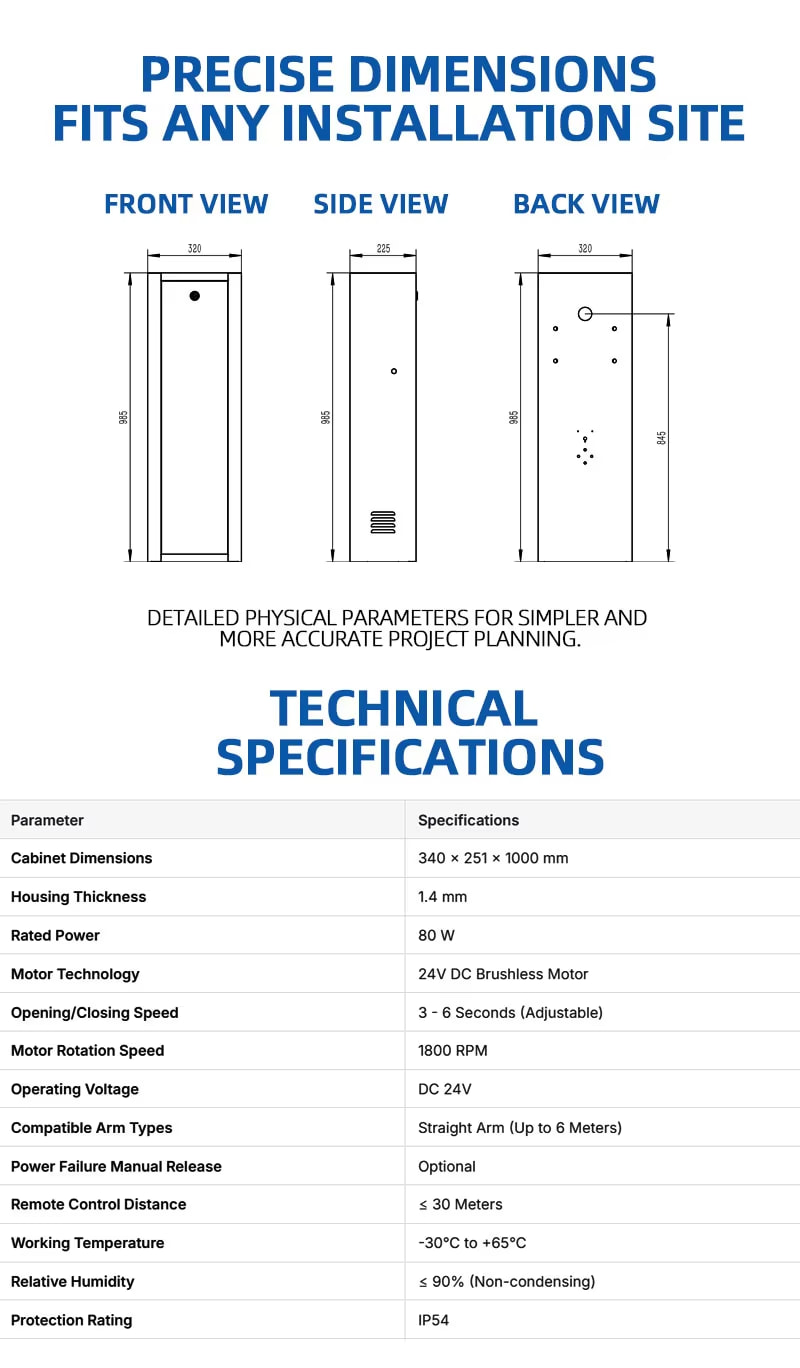
Outdoor equipment may be exposed to driving rain, dust, temperature changes, wind and accidental impact. Check the enclosure’s stated IP rating, operating temperature range, corrosion protection, drainage and the environmental conditions used for testing. The rating must apply to the exact model being quoted; do not assume that every barrier in a product family has the same protection level.
For exposed coastal, roadside or industrial locations, ask whether the finish and cabinet materials are appropriate for the local environment. If the site is particularly windy, confirm the permitted boom configuration and wind limitations with the manufacturer; a longer or fence-style arm can create a different load from a short straight arm.
6. Plan access control and system integration
A heavy-duty parking barrier is often one component in a wider vehicle access-control system. Depending on the site, it may need to work with remote controls, RFID cards or tags, a keypad, an intercom, ticketing equipment, ANPR or LPR number-plate recognition, a payment system or a building management platform. Confirm the available interfaces and the logic for authorised entry, visitor access, emergency release and manual operation.
Relevant products may offer relay, Wiegand, RS485 and TCP/IP interfaces on specified configurations. These interfaces are not interchangeable in every installation. Ask the supplier to provide a wiring diagram, interface specification and confirmation of compatibility with your existing controller, software and credentials before purchase.
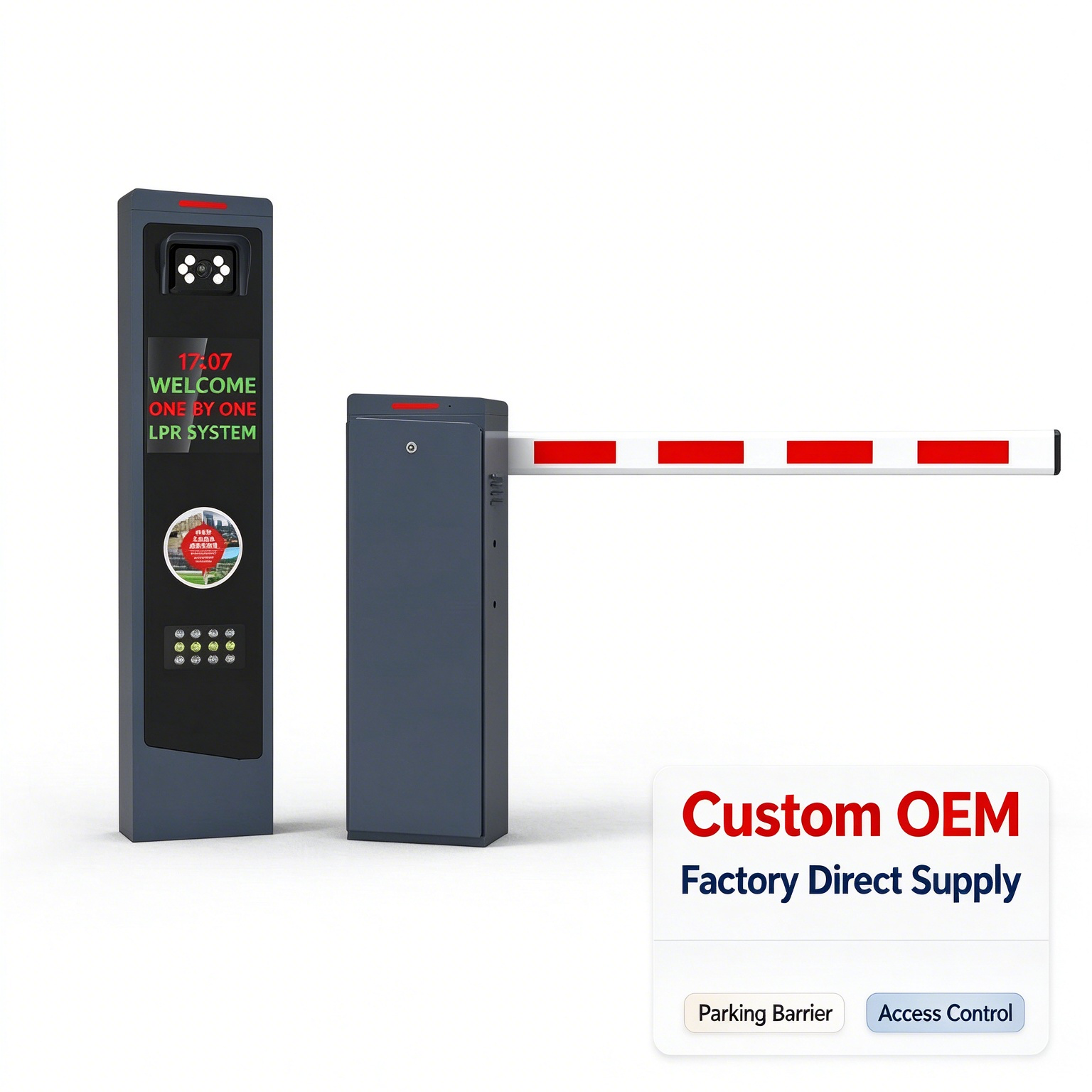
If number-plate recognition is required, establish how the camera, whitelist and blacklist, visitor workflow and barrier controller communicate. Include a plan for unreadable plates, delivery vehicles, temporary visitors and network outages so that the system remains manageable when normal automation is unavailable.
7. Assess installation, foundations and electrical requirements
Before ordering, confirm the cabinet footprint, fixing method, foundation requirements, cable routes, supply voltage, earthing, drainage and any protection needed for exposed cables. The site may also require traffic management during installation and a safe method for keeping the entrance operational while the barrier is out of service. Ask for installation drawings and wiring diagrams early enough for the civil and electrical work to be coordinated.
The quotation should state what is included: barrier cabinet, boom arm, controller, remotes, safety detectors, mounting hardware, commissioning, training and any integration work. Clarify which tasks are the responsibility of the supplier, installer, electrician or site operator.
8. Compare total cost of ownership, not just the purchase price
A low initial price may not represent the best long-term value if the system is poorly matched to traffic volume, difficult to maintain or expensive to integrate. Compare the complete installed cost and expected operating costs, including energy use, planned servicing, replacement parts, downtime, call-out charges and the availability of technical support. Ask for a written warranty that states the covered components, exclusions, duration and process for making a claim.
Where a standard warranty applies to core components, the quotation and warranty document should still confirm the terms for the exact model and order. Also check spare-part availability, remote fault diagnosis, commissioning assistance and the expected response process if the barrier fails during business hours or overnight.
9. Check maintenance access and serviceability
A heavy-duty barrier needs routine inspection and maintenance. Ask how to access the drive mechanism and control board safely, which components are considered consumables, what checks are recommended, and whether the supplier provides maintenance documentation. Ensure the installed system can be isolated safely before servicing and that operators know how to use any manual release procedure.
A practical maintenance plan should cover visual checks, arm alignment and fixings, sensor function, warning lights, control settings and signs of water ingress or corrosion. The exact intervals should follow the manufacturer’s instructions, usage intensity and the findings of the site’s risk assessment.
10. Match the barrier to the application
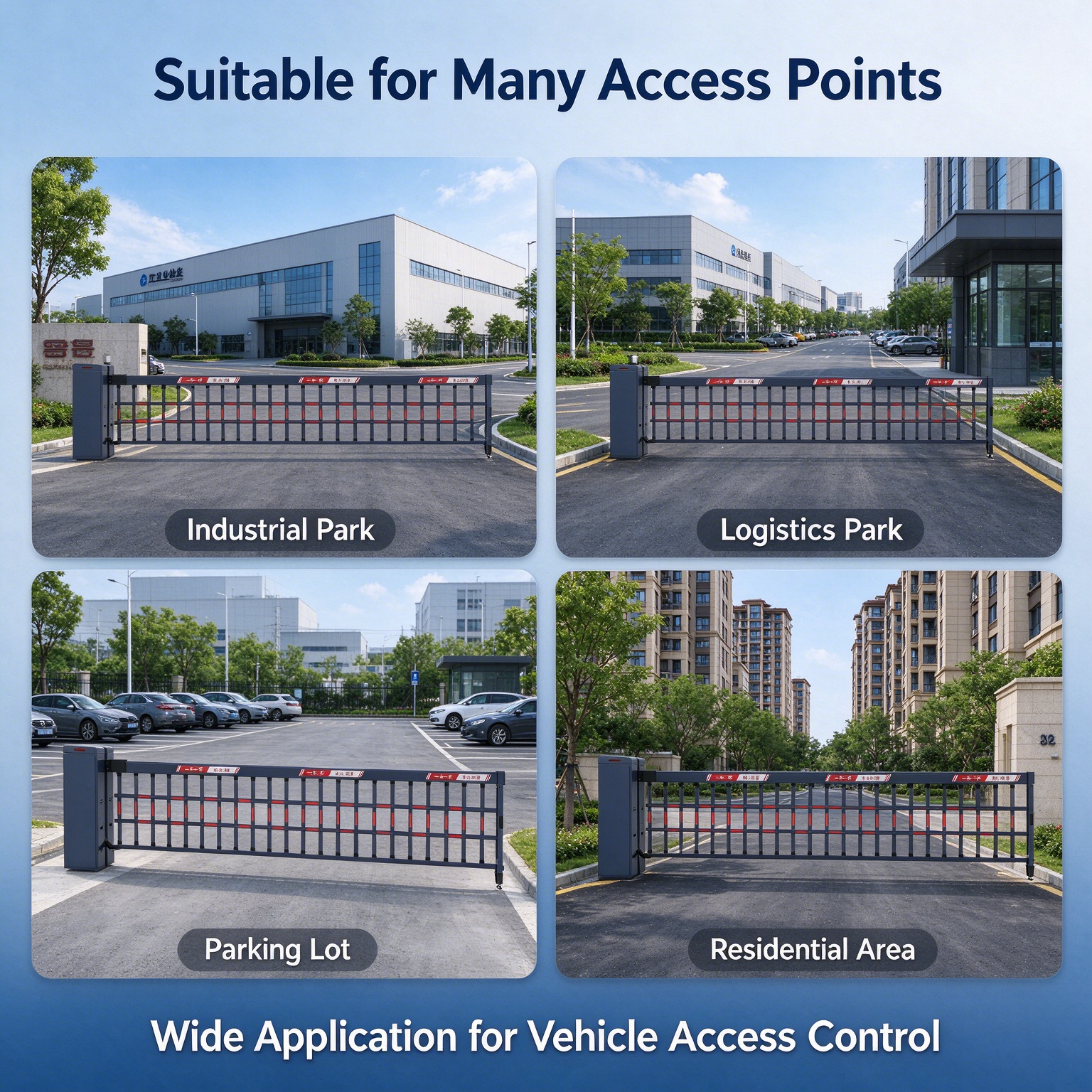
- Commercial car parks and retail sites: prioritise throughput, queue management, ticketing or ANPR integration and clear visitor procedures.
- Residential developments: consider noise, resident credentials, visitor access, night-time operation and reliable manual override.
- Industrial and logistics sites: assess vehicle mix, lane width, operating frequency, environmental exposure and integration with site security.
- Office campuses and hospitals: consider peak-time queues, emergency access, authorised-user management and continuity of operation.
The site context should drive the specification. A configuration that works well for a small private entrance may not be suitable for a multi-lane commercial facility with frequent heavy vehicles. Ask the supplier to recommend a model based on documented site requirements, not a generic “heavy-duty” label.
11. Questions to ask before requesting a quotation
Use this checklist when contacting a supplier:
- What is the maximum compatible boom length for the proposed model?
- What motor type, duty cycle and daily operating volume is it designed for?
- Which safety sensors are included, and which are optional?
- What happens if an obstacle is detected or the power supply fails?
- Which access-control interfaces are supported on this exact controller?
- What enclosure rating and operating temperature range apply to this model?
- Which conformity documents and installation instructions will be supplied?
- What is included in the price: delivery, installation, commissioning and training?
- What are the warranty terms and lead time for replacement parts?
- Can the supplier provide a wiring diagram and confirm compatibility with existing systems?
12. Choosing a supplier
A supplier should be able to present automatic boom barriers, high-speed barrier gates, ANPR and LPR systems, RFID barrier options, radar sensors, parking locks and related access-control products as a coordinated range. This helps project teams assess a barrier alongside the detection and access-control equipment it may need to work with. Product features, interfaces, ratings, warranty terms and delivery details vary by model, so request a written, model-specific proposal.
To help the supplier specify the right system, provide the site location, clear lane width, estimated peak traffic, required boom type, preferred access method, existing controller details, power availability and any site-specific safety or compliance requirements. Include photographs or a simple site plan where possible.
Conclusion
Choosing a heavy-duty parking barrier is a site-engineering decision as well as a purchasing decision. Confirm traffic demand, boom geometry, motor duty, safety detection, weather protection, integration, installation requirements and lifetime support before comparing quotations. A properly specified system is more likely to deliver dependable vehicle access and manageable maintenance over its service life.
For model-specific advice, request a quotation and written specification from our team. Include the lane dimensions and access-control requirements so the proposed configuration can be checked against the site.
Frequently asked questions
What makes a parking barrier “heavy-duty”?
“Heavy-duty” should be supported by the model’s motor and drive design, duty-cycle rating, permitted boom length, operating frequency, construction, environmental rating and maintenance requirements. Ask for the datasheet for the exact model rather than relying on the label alone.
How do I choose the right boom length?
Measure the clear lane width and check the position of kerbs, walls, signs and nearby equipment. Confirm the manufacturer’s compatible arm lengths and any limits for the selected model and arm type.
Can a heavy-duty parking barrier work with ANPR?
It may be possible where the barrier controller, ANPR camera and access-management software have compatible interfaces and the entry logic is configured correctly. Confirm the interface specification and plan for unreadable plates, visitors and network failure.
Which safety devices should I consider?
Depending on the site design, options may include inductive loop detectors, radar sensors, photocells, warning lights and suitable manual-release arrangements. A competent installer should assess the complete system and confirm the appropriate devices and safety behaviour.
What should I check about warranty and after-sales support?
Get the warranty in writing, including the covered components, exclusions and claim process. Also confirm spare-part availability, technical support, commissioning assistance and the expected response procedure if the barrier stops working.
Latest News
Baroxon Global | Boom Barrier & Parking Systems
Advanced Security Access Control and Intelligent Parking Solutions.
Company Strength
Adequate Inventory
Fast Shipping
Our Products
CONTACT US
Address: No. 2 Wanshou Road, International Innovation Industrial Park, Jinan, Shandong, China







© COPYRIGHT 2025 Baroxon Global | Boom Barrier & Parking Systems

Contact Us
Our passion is to bring your ideas to life. Work with our design team to create a one-of-a-kind custom finish or cladding system to create a truly unique space. Together we can make your story stand out. If you need something to request a sample, request pricing, or request a demo, please fill out the contact form below. Explain your request in as much detail as you can and a representative will contact you within 1 business day.