Baroxon Global | Boom Barrier & Parking Systems

Parking Barrier Maintenance: A Practical Checklist for Operators
Release time:
2026-11-05
A parking barrier is often one of the busiest moving components at a car park, residential development, business park or industrial entrance. Regular maintenance helps operators identify wear before it causes a breakdown, keep access routes dependable and check that safety devices still work as intended. The correct schedule depends on the barrier model, operating frequency, installation environment and the manufacturer's instructions. This guide provides a practical checklist for site teams managing automatic boom barriers.
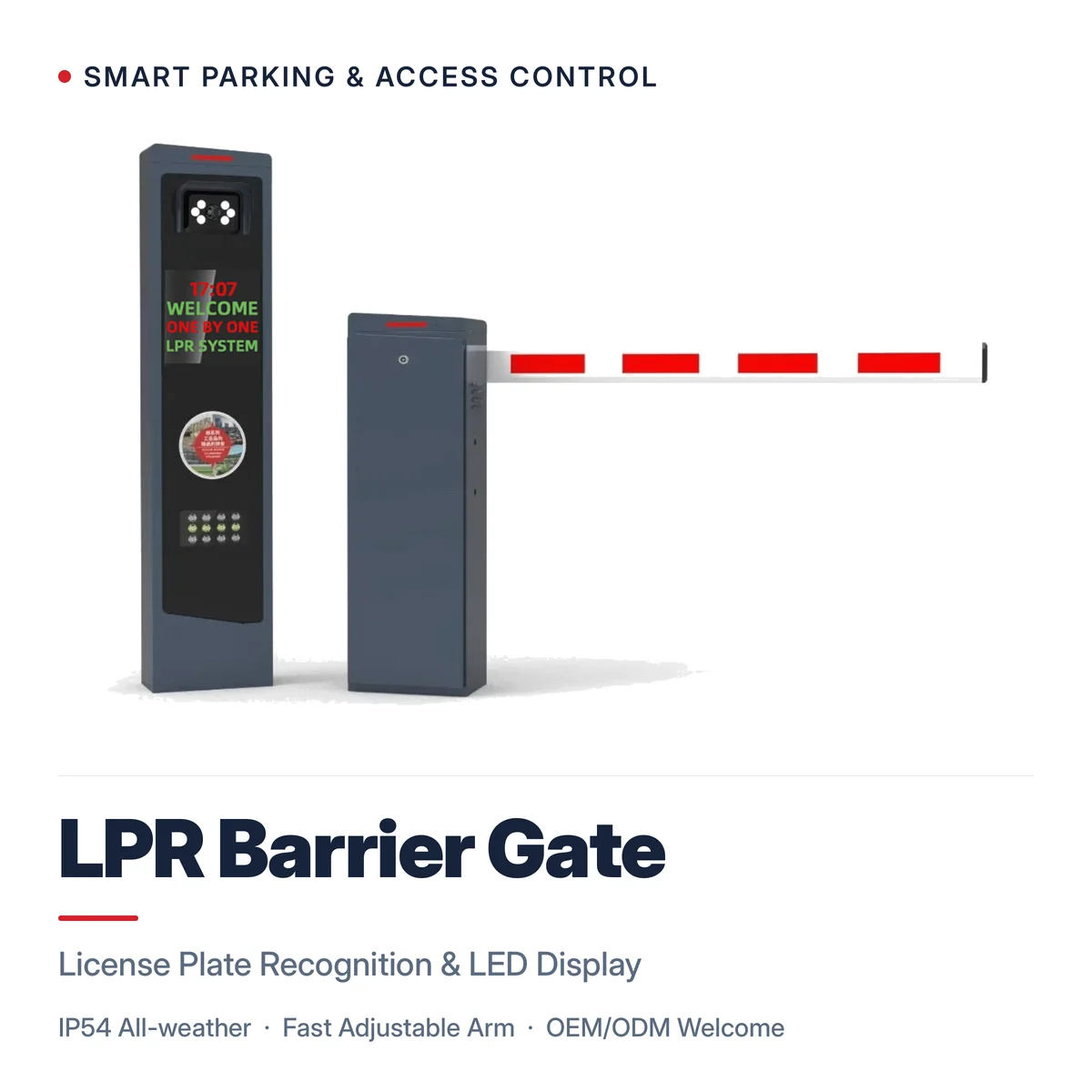
Why parking barrier maintenance matters
A neglected boom barrier may develop slow movement, unusual noise, intermittent control faults, damaged boom arms or unreliable detection. These issues can lead to queues, unplanned call-outs, restricted access and potential safety risks. Preventive maintenance should therefore be recorded, scheduled and matched to the actual duty cycle rather than carried out only after a fault appears.
Before starting: make the work safe
Only trained and authorised personnel should carry out maintenance. Follow the exact model's service manual and the site's risk assessment. Keep vehicles and pedestrians away from the work area, prevent unauthorised operation, and isolate electrical power before opening the cabinet or working on electrical or mechanical components where the procedure requires it. Never work beneath an unsupported boom arm, bypass a safety device to keep traffic moving, or reach into a moving mechanism.

Daily or shift-start visual checks
Operators do not need to dismantle the barrier for routine visual checks. Look for visible damage, a bent or loose boom arm, missing reflective strips, a cabinet door that will not close, loose external fixings, damaged cables, water ingress, warning lights that are not working and any obstruction in the arm's movement path. Check that the entrance area remains clear and that signs and road markings are legible.
Daily checklist
- Check the boom arm, end cap, reflective tape and any LED indicators for visible damage.
- Confirm the cabinet is secure and the door, lock and seals are intact.
- Look for unusual sounds, smells, vibration or signs of overheating during normal operation.
- Check that the arm's movement path is clear of parked vehicles, signs, branches and other obstacles.
- Confirm the entrance is not creating an unsafe conflict between vehicles, pedestrians and cyclists.
- Log faults and isolate the barrier if continued operation could be unsafe.
Weekly checks: movement, controls and detection
Observe several normal opening and closing cycles from a safe position. The boom should move smoothly and stop at its intended limits without repeated hesitation, excessive bouncing or abnormal noise. Test authorised access methods according to the site procedure, such as a remote control, RFID reader, access card, intercom or ANPR system. Check that unauthorised commands do not open the barrier and that status indicators match the actual state.
Weekly checklist
- Observe several complete opening and closing cycles.
- Check for changes in speed, balance, noise or end-position accuracy.
- Test the normal access-control method using the approved site procedure.
- Check the condition and alignment of visible photocells, radar units or other detectors.
- Confirm that warning lights and audible alerts, where fitted, operate as specified.
- Review the fault log for repeated resets, intermittent commands or recurring alarms.
Monthly checks: safety devices and external condition
Safety devices must be checked according to the manufacturer's instructions and the site-specific risk assessment. A competent person should verify that vehicle detection, photocells, radar or loop detectors respond correctly and that the controller behaves as specified when a detection input is active. Do not deliberately place a person or vehicle in a hazardous position to test the system. Use the approved test method and keep a record of results.
Monthly checklist
- Inspect visible arm fixings, cabinet mounting points and accessible fasteners for looseness or damage.
- Check the boom arm for cracks, bending, corrosion or damage after an impact.
- Verify safety detection using the manufacturer-approved test procedure.
- Check cable glands, conduit and external wiring for damage or water ingress.
- Inspect cabinet seals and ventilation openings; clean only as permitted by the manual.
- Review access-control logs for failed reads, communication interruptions or unexplained openings.
- Check that emergency and manual-release instructions remain available to authorised staff.
Quarterly or scheduled servicing: mechanical and electrical inspection
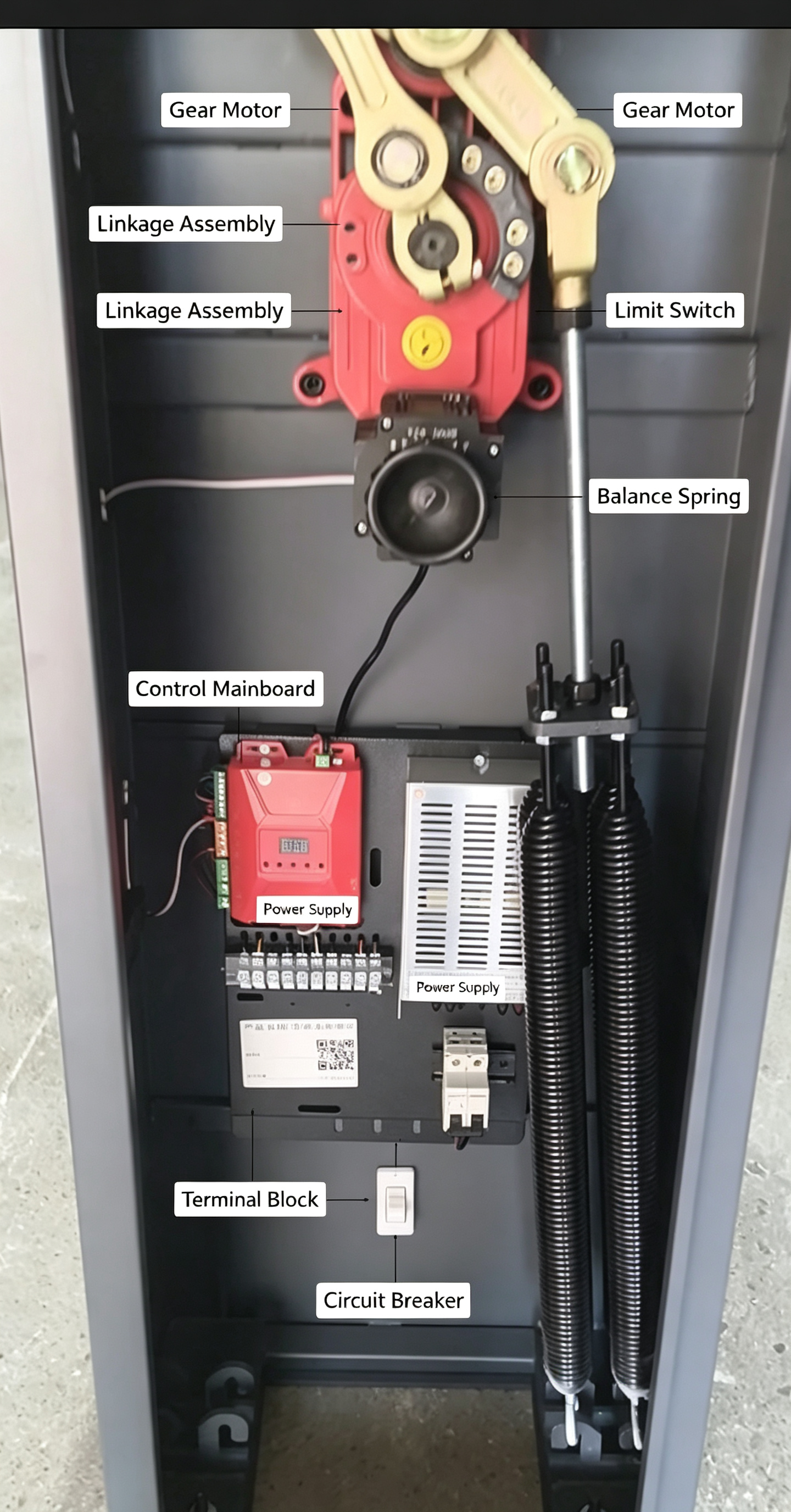
A planned service should be performed by a competent technician at the interval recommended for the specific model and operating conditions. The technician may inspect the drive mechanism, gearbox, linkage, spring or counterbalance arrangement, limit settings, control board, electrical connections, foundation and fasteners. Lubrication, adjustment and replacement should only be carried out where specified by the manufacturer. Some components are sealed or require specialist tools; do not apply general-purpose oil or grease without checking compatibility.
Scheduled-service checklist
- Confirm the service interval against the manufacturer's manual and actual cycle count.
- Inspect the motor, gearbox, linkage and counterbalance components for abnormal wear.
- Check the boom's balance and travel limits using the approved procedure.
- Inspect electrical terminals and control components for signs of heat, corrosion or loose connections.
- Confirm the foundation and cabinet mounting remain stable.
- Check manual release and power-failure arrangements without putting the equipment or people at risk.
- Record parts adjusted or replaced, test results, technician details and the next service due date.
Weather and environmental maintenance
Outdoor parking barriers may be exposed to persistent rain, wind-driven water, road salt, grit, dust, temperature changes and occasional flooding. After severe weather or a vehicle impact, carry out an additional inspection before returning the barrier to normal service. Keep drainage clear, avoid directing pressure washers at seals or electrical enclosures, and use only cleaning products approved for the cabinet finish. For coastal or industrial locations, ask the supplier whether additional corrosion protection or a more suitable ingress-protection rating is required.
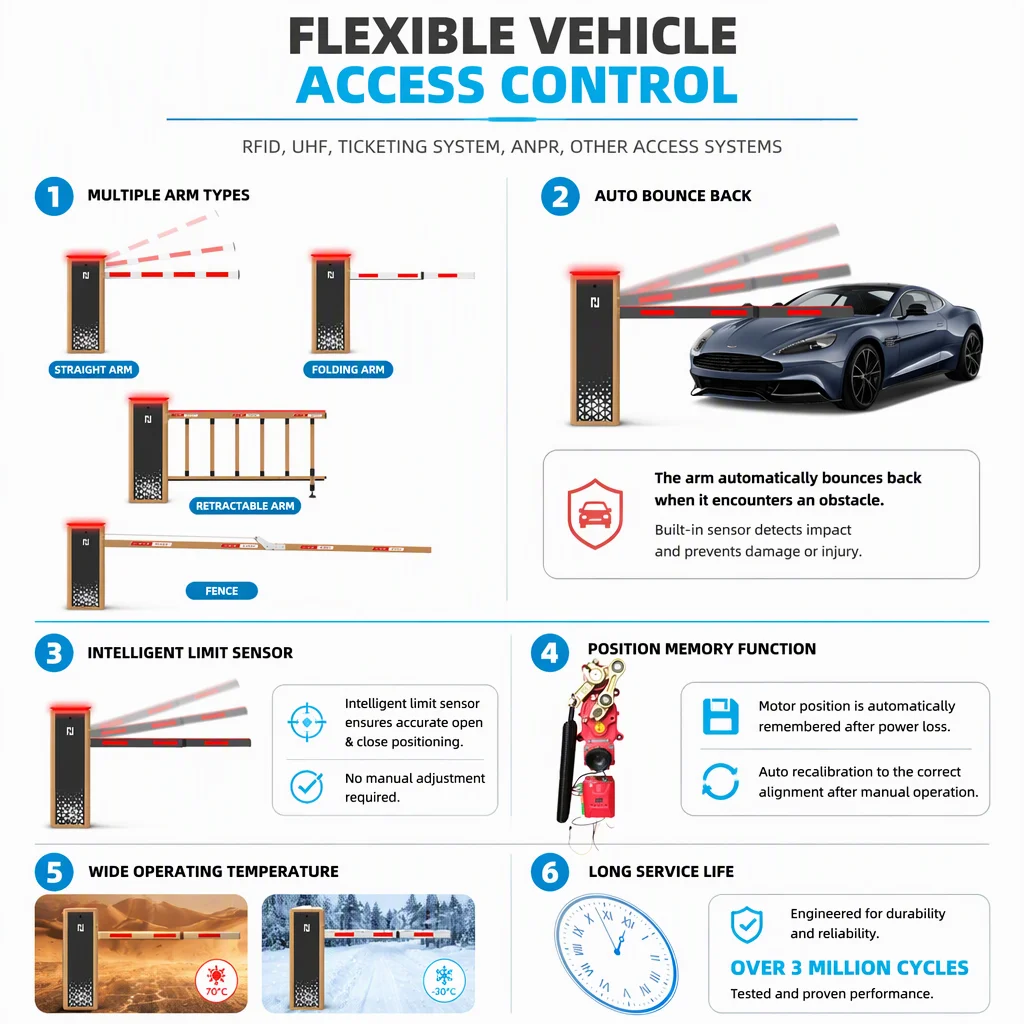
Common warning signs and what operators should do
A barrier that moves slowly, stops short, reverses unexpectedly, makes a new mechanical noise or fails to recognise authorised credentials should be reported promptly. Record when the fault occurs, the displayed error code, the weather conditions and any recent impact or maintenance work. Do not repeatedly reset the controller without investigating the cause. If the arm or safety system is damaged, stop operation and arrange an inspection by a competent technician.
| Symptom | Operator action |
|---|---|
| Arm moves slowly or unevenly | Stop repeated cycling; log the symptom and request a mechanical inspection. |
| Barrier does not respond to access control | Check the approved user-side procedure and report the controller or communications fault. |
| Safety detector appears unreliable | Take the lane out of service if safety cannot be assured; arrange competent testing. |
| Cabinet shows water ingress or electrical damage | Isolate the equipment in accordance with site procedures and request qualified support. |
| Arm is bent or has been struck | Do not operate until the arm, balance and safety functions have been inspected. |
Keep a maintenance record
A useful log records the barrier ID and location, model and serial number, date and time, cycle count if available, checks completed, test outcomes, faults reported, parts used, technician and next service date. Keep service records with the installation manual, wiring diagrams, risk assessment and commissioning documents. A consistent record helps operators spot recurring faults and plan spare parts before a critical component fails.
Printable parking barrier maintenance checklist
- Daily: visual condition, arm path, cabinet security, warning indicators and unusual noise.
- Weekly: opening and closing behaviour, authorised access methods, visible detector condition and fault log.
- Monthly: approved safety-device tests, fixings, wiring condition, seals and manual-release instructions.
- Scheduled service: drive mechanism, gearbox, balance, limit settings, electrical connections and foundation.
- After an incident: inspect after impact, flooding, storm damage, power fault or unexplained operation.
- Every visit: record results, corrective work, parts used and next due date.
Choosing a barrier that is easier to maintain
Maintenance needs should be considered before purchasing a replacement barrier. Ask the supplier for the exact model's service manual, recommended inspection intervals, spare-parts list, warranty terms, duty rating and approved procedures for manual release and fault diagnosis. Confirm the availability of replacement boom arms, control boards, motors and compatible safety devices. Product ranges may include different drive and access-control configurations; specifications should be confirmed for the selected model rather than assumed to apply across the entire range.
Frequently asked questions
How often should a parking barrier be serviced?
There is no single interval that suits every installation. Follow the maintenance schedule in the exact model's manual and adjust inspection frequency to traffic volume, cycle count, weather exposure, site risk and the supplier's recommendations. Busy entrances may need more frequent checks than lightly used private access points.
Can site staff lubricate a boom barrier themselves?
Only if the manufacturer's instructions explicitly permit it and the staff member is trained for the task. Some mechanisms use sealed bearings or require a specific lubricant and procedure. Incorrect lubrication can attract grit, damage components or affect the warranty.
What should be checked after a vehicle strikes the boom?
Keep the barrier out of service until a competent person has inspected the arm, mounting points, balance, drive mechanism, limits and safety devices. A boom may look intact while internal parts or alignment have been affected. Record the incident and do not return the barrier to use solely because it still moves.
Should a barrier remain in service if a safety detector fails?
If safe operation cannot be assured, follow the site's emergency procedure and take the affected lane out of service until the fault is assessed and corrected. Do not bypass a detector or rely on staff to watch the arm as a substitute for a functioning safety system.
Conclusion
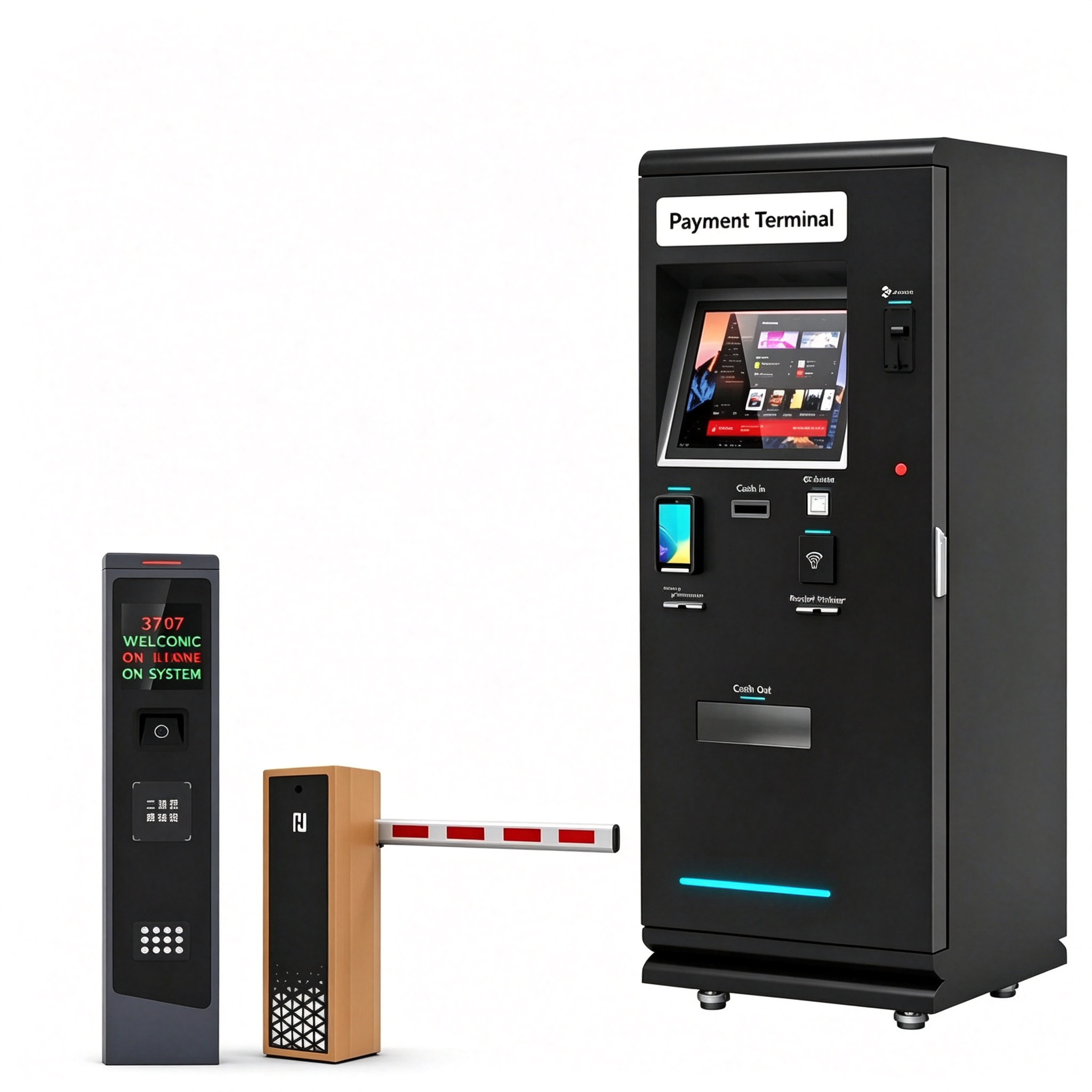
A practical parking barrier maintenance programme combines daily visual checks, regular operational observations, documented safety testing and scheduled servicing by competent technicians. Keep the boom arm, drive mechanism, controls, detection devices and cabinet condition under review, and act promptly when faults appear. Always follow the instructions for the exact model and retain a clear maintenance history. These steps help operators reduce avoidable downtime and manage vehicle access more safely and consistently.
For equipment selection and service documentation, explore our automatic boom barrier gate guide or contact our team to confirm the service requirements for the exact model.
Latest News
Baroxon Global | Boom Barrier & Parking Systems
Advanced Security Access Control and Intelligent Parking Solutions.
Company Strength
Adequate Inventory
Fast Shipping
Our Products
CONTACT US
Address: No. 2 Wanshou Road, International Innovation Industrial Park, Jinan, Shandong, China







© COPYRIGHT 2025 Baroxon Global | Boom Barrier & Parking Systems

Contact Us
Our passion is to bring your ideas to life. Work with our design team to create a one-of-a-kind custom finish or cladding system to create a truly unique space. Together we can make your story stand out. If you need something to request a sample, request pricing, or request a demo, please fill out the contact form below. Explain your request in as much detail as you can and a representative will contact you within 1 business day.